
Our Vision
An Institution for Our Ocean’s Future
Since 2016, Biopixel Oceans Foundation has strived to conduct meaningful research and initiatives that translate to the conservation of the world’s oceans. As a leading non-profit institution that is experienced and equipped to take on a range of marine expeditions and projects, we facilitate critical research, exploration and education programs that are needed to deliver high-impact environmental solutions.
The Foundation was established by IT entrepreneur Bevan Slattery and marine biologist Richard Fitzpatrick, who both spent much of their youth in and around Queensland’s reefs and oceans –and have since made it their mission to help preserve our precious natural environment.
Meet the team
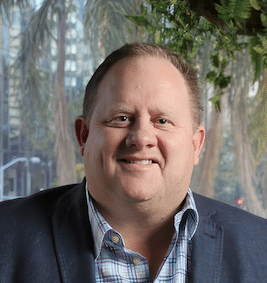
Bevan Slattery
Co-Founder
A serial entrepreneur and Biopixel Oceans Foundation’s Co-Founder, Bevan Slattery has been successfully building IT and telecommunications businesses in Australia for nearly 20 years. He has experience transforming ideas into ASX-listed innovations, having started and scaled numerous now-public companies including Pipe Networks, NEXTDC, Megaport and Superloop.
Having grown up on the coast of Queensland, Bevan developed a true passion for the Great Barrier Reef at a young age, which has since set in motion a philanthropic mission to help conserve and restore critical marine ecosystems.
Now the Founder and CEO of Soda, Bevan is driving Australian innovation and prosperity through digital infrastructure, environmental sustainability and business ventures. He co-founded Biopixel Oceans Foundation, a proud part of the Soda Group, alongside Richard Fitzpatrick in 2016 with the vision of discovering a better future for our oceans.
Richard Fitzpatrick
Co-Founder & Director of Photography
Richard Fitzpatrick is an Emmy-awarded cinematographer and an Adjunct Professional Research Fellow at James Cook University where he specialises in sharks. He has shot more than 120 films for clients such as the BBC, National Geographic and Discovery Channel. Richard is renowned for filming unusual complex behavioural sequences.
Extreme environments are no problem for Richard who has filmed all over the world, from the deserts of outback Australia, to the jungles of the Amazon, to snow-covered Alaska. Having spent more than 20,000 hours underwater, he has filmed in the crystal-clear coral gardens of the Great Barrier Reef, the murky waters of the Amazon, and everything in-between.
In the process, Richard has won numerous international awards. He started out as a marine biologist, learning how to work with sharks in public aquariums around the world, including Oceanworld in Manly, Maui Ocean Centre in Hawaii and the Great Barrier Reef Marine Park Authority’s Reef HQ in Townsville.
Currently based at James Cook University in Cairns, Richard and his team at Biopixel now manage one of the largest marine stock vision libraries and dedicated biological filming studios in the world. Many of the complex behavioural sequences for shows such as ‘Attenborough’s Great Barrier Reef’. ‘Welcome to Earth with Will Smith’ and James Cameron’s ‘Supernatural’ series, were filmed in Biopixel’s Aquarium studio at JCU, Cairns Campus.
Richard’s current research through the Biopixel Oceans Foundation has contributed to over 20 scientific publications. This research includes a scientific response to shark bites off the Queensland coast for the State Government – satellite tagging and tracking tiger sharks, bull sharks and other reef sharks along the Great Barrier Reef. The Foundation has also had recent unprecedented success with a new discovery, identification and tracking of under-researched megafauna (whale shark, manta and whale) aggregations in the far north of the Great Barrier Reef.
Stories of his underwater adventures and career highlights are catalogued in the University of New South Wales (UNSW) publication ‘Shark Tracker – The Confessions of an Underwater Cameraman’.
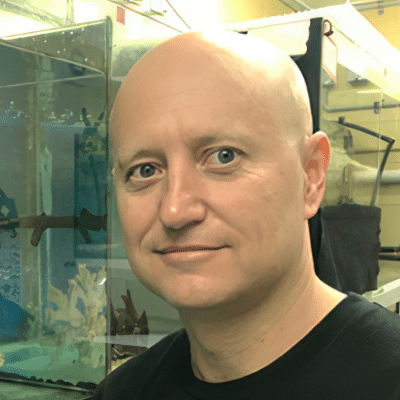
Dr. Adam Barnett
Principal Scientist & Manager
Dr. Adam Barnett is the Principal Scientist of Biopixel Oceans Foundation, Chair of BOF’s Science Committee, and a Senior Research Fellow at James Cook University. Adam has over 20 years’ experience in marine research, with a broad interest in ecology, including population dynamics, conservation, spatial ecology (ie. migration, movement behaviour and habitat use), and fisheries ecology.
He has a particular interest in predator-prey interactions and unravelling the role of predators in structuring ecosystems. Much of his work is focused on research with applied outcomes and includes, for example, identifying habitats that are essential for the sustainability of fish stock, developing resilient sports fisheries and understanding shark-human interactions (eg. shark tourism, depredation and shark bites) to assist management and find solutions to mitigate negative interaction.
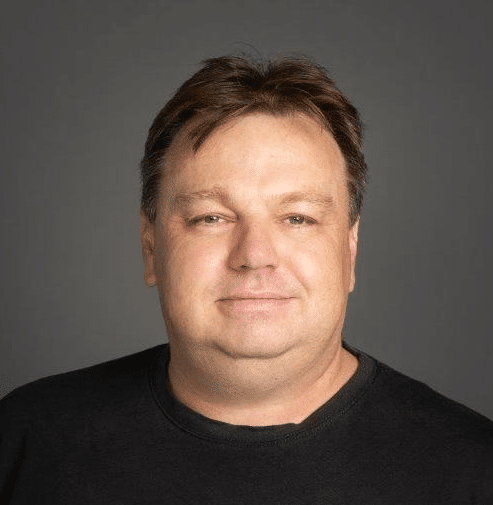
Dr. Matt Dunbabin
Principal Technologist
Matt Dunbabin is an internationally accomplished robotics specialist and engineer with a proven track record in the research, field evaluation and operational use of AI, autonomous systems and sensors for unsupervised monitoring and conservation tasks in complex marine environments. His applied research interests include AI-enabled marine pest identification and control, autonomous systems for scaling reef restoration, and real-time vision and acoustic detection and tracking of marine animals.
Matt is a Professor at the Queensland University of Technology Centre for Robotics where he leads the Marine Robotics Lab, and is a chief investigator in the ARC Special Research Initiative Securing Antarctica’s Environmental Future (SAEF).
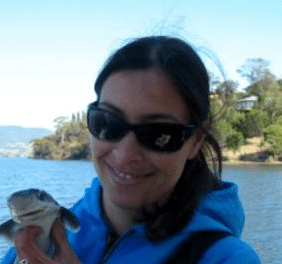
Dr. Kátya Abrantes
Biopixel Oceans Foundation Scientific Committee
Dr. Kátya Abrantes is a member of the Biopixel Oceans Foundation Scientific Committee and a Research Fellow at James Cook University. Originally from Mozambique, Kátya has >20 years’ experience working in the marine environment, including 13 years on shark and ray research. With experience both in Australia and overseas (East Africa, the Pacific), Kátya’s main area of expertise is stable isotope analysis, a technique she uses along with tracking to study trophic ecology (who eats who) and animal movement (e.g. migration patterns, habitat use, identification of critical habitats for fisheries species).
Kátya has also worked on the impacts of tourism and other human activities on shark behaviour, bycatch reduction (using electric field deterrents), the identification and quantification of impacts of different human activities on aquatic food webs
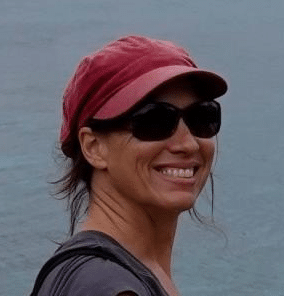
Dr. Christine Dudgeon
Biopixel Oceans Foundation Scientific Committee
Dr. Christine Dudgeon is a member of the Biopixel Oceans Foundation Scientific Committee, a Research Fellow at the University of the Sunshine Coast and the University of Queensland. She is globally recognised for her research on the ecology and evolution of marine animals, particularly sharks and rays. Her PhD thesis focused on the ecology of the leopard sharks Stegostoma tigrinum and she remains the world expert on this species. She has worked across taxa including sharks and rays, marine mammals, bony fishes, corals and sea birds, to address fundamental questions regarding the origins and maintenance of biodiversity and applications to wildlife management.
Her current projects include a world first conservation initiative – the StAR Project – which focuses on restoring depleted populations of sharks and rays in the wild with captive born animals. This is a large global collaboration, with the first stage restoring leopard shark populations in eastern Indonesia. She is the Co-vice chair for the Oceania region of the IUCN Shark Specialist Group.
Nicolas Lubitz
Biopixel Oceans Research Assistant
Nicolas is a PhD candidate at James Cook University and research assistant at Biopixel Oceans Foundation. Originally from Germany, he has lived in places such as Florida, British Columbia, Bahamas, Ecuador and South Africa to study wildlife, especially sharks. His PhD thesis aims to uncover why highly mobile sharks with broad distributions migrate to specific places at specific times. In particular, he is teasing out the role of context in driving movement patterns, and the causes and consequences of behavioural variability.
To do this, he is tracking bull and great hammerhead sharks as a case study in a variety of habitats along the east coast of Australia and Southern Africa. Besides his studies, Nicolas is an outdoors enthusiast that uses all his spare time for adventures out on the ocean or in the bush, sometimes spending weeks in extremely remote locations, hiking, camping and finding and filming wildlife, above and below the surface.
Ingo Miller
Biopixel Oceans Research Assistant
Ingo is now pursuing his PhD, focusing on marine megafauna movement ecology in a changing environment. He utilises tracking data, combined with environmental and biological variables and advanced modelling techniques to predict the impacts of future climate change scenarios on megafauna such as sharks and rays and their prey. He also considers other human stressors including plastic and chemical pollution.
Prior to his PhD, Ingo graduated with an MSc in Marine Environmental Sciences from the University of Oldenburg, Germany, where he also worked for two years as a professional research assistant, affiliated with the Institute for Chemistry and Biology of the Marine Environment. During this time, he studied the ecotoxicity of various sunscreen chemicals (UV filters) on stony corals of different life stages and contributed toward the development of a standardized ecotoxicity test for corals. Ingo’s passion for marine research extends back to his undergraduate thesis, which focused on the effects of microplastics on corals and resulted in a publication in a high-impact journal.